Week seven of the legislative session marked the first chamber actions after the first funnel. The House and the Senate shifted their focus to floor debate to continue to move bills through the legislative process.
In even-numbered years, legislators have four weeks between the first and the second funnel deadline, which is set for Friday, March 20, 2026. By this date, non-funding and taxation-related bills must have passed through committee in the opposite chamber of origination to remain eligible for passage. As such, the coming weeks will feature a great deal of floor debate and full policy committee agendas.
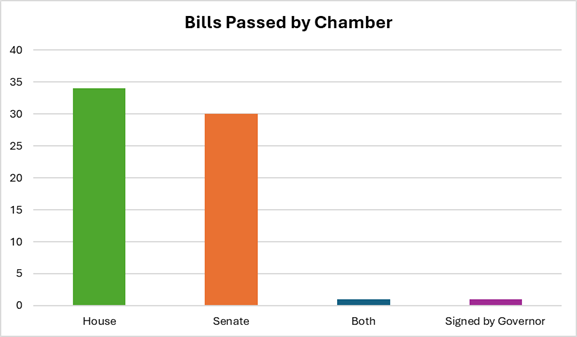
Supplemental State Aid is the First Bill Signed into Law
The first bill passed by both chambers and signed by Governor Reynolds set supplemental state aid (SSA) for the next fiscal year. This legislation provides school districts with advance notice for budget preparation and certification and sets additional funding to account for annual inflationary increases.
SF 2201 increases the SSA amount by 2%. This value was a compromise reached by the House and the Senate, each of which proposed differing percentages earlier in the session -the House proposed a 2.25% increase and the Senate proposed a 1.75% increase.
Governor’s Property Tax Subcommittee
Iowa property taxes remain as one of the top issues the legislature seeks to address in 2026. Last week, the Senate held a five-person subcommittee on SSB 3034, the Governor’s proposed property tax bill. The subcommittee meeting included five senators and was scheduled for an hour and a half to give the public an opportunity to express their feedback on the bill as written. A typical subcommittee is scheduled for 15-30 minutes and includes three members, so a 90-minute, five-member subcommittee shows the level of interest and impact in property tax reform this session.
At the end of the subcommittee, the chair, Senator Dan Dawson, expressed that this bill is not the final version that will be passed by either chamber. Senator Dawson noted ongoing concerns about the TIF provisions in the bill, as well as the hard two percent cap on property tax levies. Senator Dawson also reaffirmed the legislature’s commitment to tackling high property taxes as Iowa has the 10th-highest property tax rates in the country, and the current system is not working for Iowans. The bill passed out of the subcommittee with a recommendation to amend the bill in the full Ways and Means Committee.
Primary Election Filing Period
The filing period of the 2026 primary elections opened on Monday, February 23, for state and federal offices. While many individuals have declared their candidacy, they will officially be set to appear on the June 2 primary ballot once they file an affidavit of candidacy and submit the appropriate number of nominating petitions. The final day for filing for state and federal offices is Friday, March 13, and the Iowa Secretary of State will continue to update the list of candidates on their website.
What’s next?
Three weeks remain before the second funnel deadline, so the chambers will continue with floor debate and full committee meetings. Additionally, the House will hold subcommittee meetings on budgets which are scheduled for this week. Those meetings typically involve presentations by departments and entities included within the respective budgets.
Behind the scenes, conversations will continue about overall budgets, property taxes, and other priority bills. Bills related to budget and taxation are not subject to the funnel deadline, so there is no firm deadline for when these bills will be introduced and debated. The Iowa Revenue Estimating Conference (REC) is also set to meet in March, and these numbers will assist the legislature and the Governor with drafting budgets before introduction.