2026 Iowa Legislative Session
The second session of the 91st General Assembly is scheduled to begin on Monday, January 12. This legislative session is slated for 100 days, as required by Iowa statute, as it is an even-numbered year.
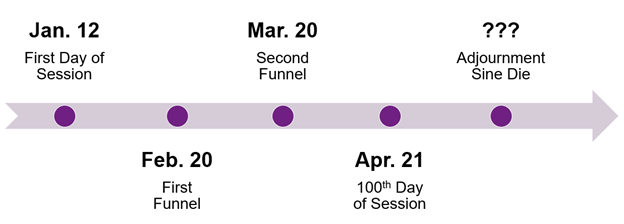
Unfinished business from the 2025 session will carry over, meaning many of the legislature’s priorities will mirror last year’s headline issues.
Property tax reform is expected to dominate the agenda, as the chambers failed to reach an agreement in 2025 and the majority parties remain eager to secure a deal ahead of the 2026 election.
Other topics likely to resurface include tax increment financing, budget shortfalls, energy policy, and renewed debate over eminent domain following Governor Kim Reynolds’ veto of a contentious measure last session.
New Iowa Senate Committee Assignments Ahead of 2026
New Senate Majority Leader Mike Klimesh released new Senate committee assignments ahead of the start of the 2026 Legislative Session. Because of the significant leadership changes in the Iowa Legislature, changes to committees were anticipated, which may impact the path by which certain bills pass through the legislature.
In a release announcing the committee changes, Majority Leader Klimesh stated, “There are many issues that Iowans are dealing with and expect us to face head on, and Senate Republicans are ready to hit the ground running come January.”
Iowa Revenue Estimating Conference
The state budget is top of mind for legislators heading into the second year of the 91st General Assembly. On December 11, the Revenue Estimating Committee (REC) met to update its October estimates, which forecasted $8.13 billion in revenue for FY 2026. The new estimates of $8.16 billion in FY 2026 and $8.5 billion in FY 2027 are slightly higher than previous ones.
However, General Fund appropriations were set at $9.42 billion for FY 2026, so there is still a gap between ongoing revenues and ongoing spending. As such, policymakers will be forced to take a serious look at state spending and one-time resources to ensure the budget remains balanced.
Governor Kim Reynolds is required to use this latest estimate as the basis for the budget she submits to the Iowa Legislature at the start of session. While many lawmakers have pointed out that decreased revenues were anticipated due to recent tax cuts and large reserve balances, larger uncertainties still exist, such as the long-term impact of the longest federal government shutdown in U.S. history, agricultural trade with China, and tariffs. The consequences of these factors will likely impact the next REC in March 2026 and the overall budget process.
2025 Iowa Special Elections
On Tuesday, December 9, voters in Iowa House District 7, which includes Calhoun, Pocahontas, and Sac Counties and part of Webster County, elected Wendy Larson (R) to the seat vacated by Former Representative Mike Sexton. Larson defeated Democratic opponent Rachel Burns with 70% of the votes cast and retained the GOP supermajority in the Iowa House.
Iowa Senate District 16 will hold the sixth and final special election of the year on December 30th to fill the vacant seat after the passing of Senator Claire Celsi. Candidates for the vacant seat include Lucas Loftin (R), an employee-owner at Wright Service Corp., and Renee Hardman (D), a member of the West Des Moines City Council.
Democrats are expected to retain this seat and to maintain the party balance in the Iowa Senate. Despite the strong Democratic lean of the district, both parties are engaging due to the unpredictable nature of low-turnout special elections.
Iowa Majority Leader Klimesh Proposes New Carbon Capture Pipeline Legislation
Senate Majority Leader Mike Klimesh has indicated that pipeline legislation will be a priority early in the 2026 Iowa Legislative Session, with a focus on addressing ongoing disputes surrounding carbon sequestration and other utility pipelines. His proposal is expected to allow pipeline developers greater flexibility to adjust routes within a defined corridor after filing, with the goal of avoiding landowners who oppose projects and reducing reliance on eminent domain.
Klimesh has framed the approach as a property-rights solution that respects both landowners who do not want pipelines on their property and those who wish to voluntarily participate. While carbon pipelines are the immediate driver, the proposal could apply more broadly to other utility infrastructure projects.